Dr Christopher Shirley
Director, Medical Practitioner
M.B., B.S. QLD
Dr Chris has almost 40 years of experience as a medical practitioner. He completed his Bachelor of Medicine and Bachelor of Surgery (MBBS) at the University of Queensland and has developed extensive clinical knowledge across a broad range of surgical disciplines. His background includes operative experience in neurosurgery, cardiac surgery, plastic surgery, orthopaedic surgery and skin cancer surgery. He has also undertaken postgraduate training in general surgery, regenerative medicine and skin cancer. Dr Chris is committed to delivering safe, patient centered care that aligns with evidence based medical practice.
Dr. Chris has achieved notable milestones in his career, passing the Surgical Primary Examination with the Royal Australasian College of Surgeons (RACS) in 1993. He served as an Orthopaedic Principal House Officer for three years and as an advanced, accredited trainee in General Surgery for another three years. Additionally, he has worked in Accident and Emergency, as a surgical assistant in numerous speciality fields such as Plastic and Reconstructive, Bariatric, Neurosurgery, Cardiothoracic, Upper Limb, Orthopaedic and General Surgery for over 20 years.
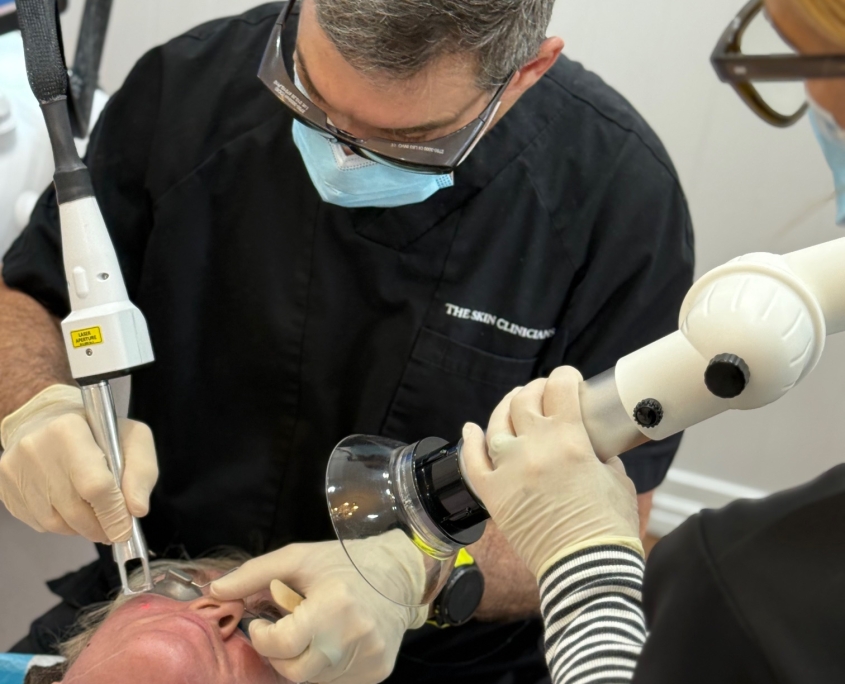
Dr. Chris continues to provide comprehensive surgical primary care, with a special focus on managing skin cancer and aesthetic skin requirements. He conducts thorough routine skin checks, excises suspicious lesions and moles, treats skin cancers, even those requiring complex repair or grafting and addresses skin irregularities for aesthetic purposes. No referral is required for these services.
As a testament to his commitment to delivering high-quality patient care, Dr. Chris is a member of the Skin Cancer College of Australasia (SCCA), the leading body for primary practitioners in Australia and New Zealand. He has completed the Certificate of Skin Cancer Medicine and the Certificate of Dermatoscopy with this college.
In addition to his operative experience, Dr Chris is trained in medical weight loss treatments. He believes in a holistic approach emphasising lifestyle intervention.
Dr. Chris has also developed a keen interest in maintaining wellness as we age. He is a member of The Australasian Academy of Anti-Ageing Medicine, which focuses on helping individuals achieve functionality and wellbeing into older age. This aligns with the World Health Organisation’s initiative declaring 2021-2030 as the Decade of Healthy Ageing.
Dr. Chris is married with four children and enjoys a variety of hobbies that keep him active and fulfilled outside of work. He is passionate about cycling, kitesurfing, dirt bike riding, and swimming. Additionally, he is a qualified and active Rugby Union referee. Dr. Chris finds his work to be deeply satisfying and rewarding, particularly when helping patients achieve the health outcomes they deserve.