How We Use UltraClear™ and other modalities to improve scarred skin

Scars tell a story, but they don’t always reflect how you want to feel in your own skin.

Whether it’s acne scarring, self‑harm scars, a surgical line, or a burn, many people describe their scars as a daily reminder they’d rather soften, blend, or move on from.

At our clinic, we take a multimodal approach to scar treatment, using a combination of advanced technologies and evidence‑based techniques, including UltraClear™ laser, to improve the look and feel of scars in a realistic, considered way.

Our goal is not to ‘erase’ your scars, but to help them become less noticeable, more comfortable, and better integrated with the surrounding skin.

The Types of Scars We Commonly Treat

Scars behave differently depending on how they formed, how long they’ve been present, and where they sit on the body. We regularly see:

  • Acne scars, including ice‑pick scars, boxcar scars, rolling scars, and more superficial indentations
  • Pigmented scarring and post‑inflammatory marks that stay dark after acne or injury
  • Self‑harm scars on the arms, legs, and other visible areas
  • Surgical scars, including breast, abdominal, facial, and orthopaedic scars
  • Burn scars and post‑traumatic scars
  • Hypertrophic scars that are raised and thickened within the original wound

Because each of these behaves differently, the best results usually come from combining more than one treatment rather than relying on a single ‘hero’ procedure.

Where UltraClear™ Laser Fits In

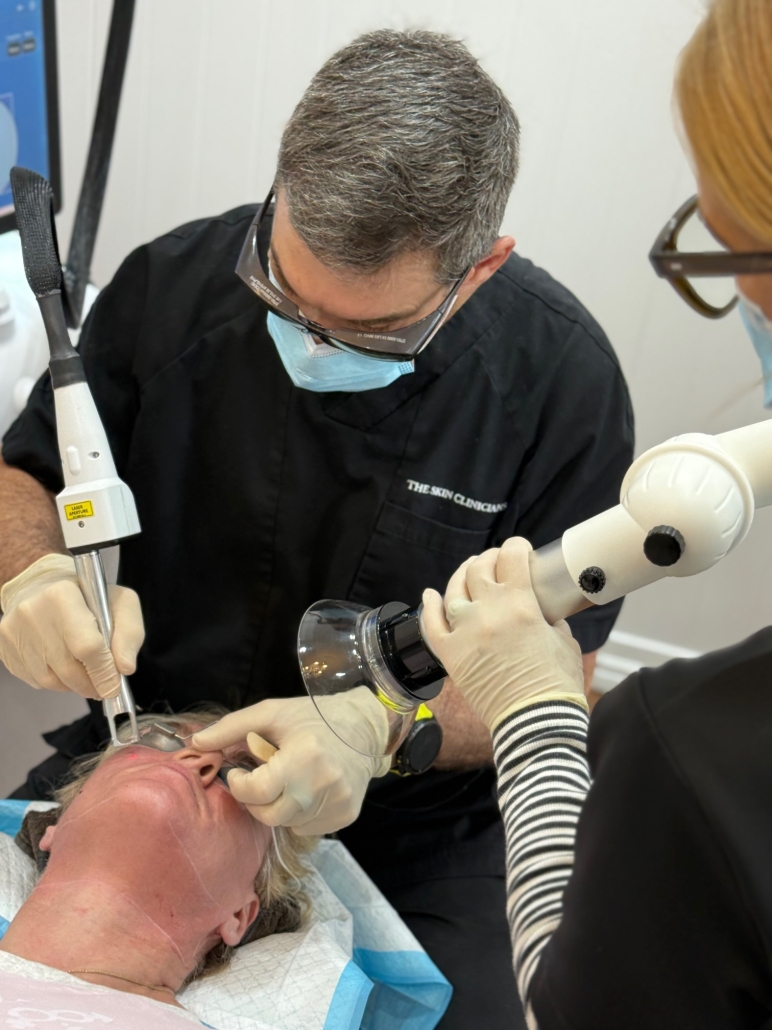
UltraClear™ is a next‑generation cold fibre laser with six different treatment modes in one device. For scar work, it allows us to address both the surface of the skin and the deeper structure of the scar.

  • Lighter resurfacing modes (such as Clear and Clear+) gently smooth roughness, soften fine textural changes, and blend the edges of scars with the surrounding skin.
  • Medium‑depth fractional modes (like Ultra and 3D MIRACL™) create microscopic microchannels into the dermis to stimulate collagen remodelling—useful for atrophic acne scars, superficial indentations, and more general texture changes.
  • Coring Mode is particularly valuable in scar treatment. By removing tiny cores of dense or tethered scar tissue, it can help release tight, indented areas and trigger robust collagen renewal, gradually improving contour and shadowing in scars such as rolling acne scars, some surgical scars, and selected self‑harm scars.

Because the platform is highly adjustable, we can tailor energy, depth, and density to the specific scar type, the area being treated (face vs body), and your tolerance for downtime.

What to Expect From Treatment

Before any procedure, we start with a comprehensive consultation.

In this visit we:

  • Take a detailed history and examine your scars
  • Identify scar type (raised, indented, mixed, pigmented, tight) and location
  • Discuss what matters most to you, appearance, comfort, movement, or all three
  • Outline which modalities are appropriate (for example, UltraClear, Plexr, microneedling, injectables, or excision)
  • Explain expected downtime, aftercare, and an approximate number of sessions
  • Provide a clear treatment plan and quotation so there are no surprises

Sometimes the best approach is staged over months, gradually layering different treatments as your skin remodels.

Other advanced treatments we may use alone or in combination

Used for very precise tightening and surface refinement in delicate areas, or to smooth raised, uneven scar edges without traditional cutting.

These may include corticosteroid injections to soften raised, thickened scars, as well as bio‑regenerative injectables that support healthier collagen and skin quality around indented or atrophic scars.

Creates controlled micro‑injuries to stimulate collagen, particularly helpful for more diffuse acne scarring or when we want a lower‑downtime option between laser sessions.

Similar to Kleresca‑style treatments, this is used to calm inflammation, support wound healing, and enhance collagen remodelling as part of a structured scar program.

Collagen‑stimulating injectables and targeted topical protocols that help rebuild a healthier dermal matrix so scars gradually appear softer and less prominent.

Small doses of neuromodulators can be used around scars that are being pulled or distorted by muscle movement, reducing tension and helping the area heal in a more relaxed position.

In selected cases, removing and re‑closing a scar—or combining a minor excision with laser and other therapies—may be one of the options to improve contour and blending, especially for certain linear or problematic scars.

At‑home measures such as silicone scar tapes or gels, pressure therapy, massage protocols, supportive dressings, sun protection, and medical‑grade skin care. These are often simple but powerful tools to help flatten, soften, and protect scars over time.

Face, Neck, and Body: Scars Are Not Just on the Face

Scars can appear almost anywhere on the body, not just on the face, and many people feel self‑conscious or uncomfortable because of them. This might be from acne, surgery, injury, or medical treatments over the years.

We commonly help patients with:

  • Facial scars – acne scars, chickenpox scars, and traumatic scars on the cheeks, temples, forehead, chin, and jawline
  • Neck scars – including scars after surgery, injury, or skin cancer treatment
  • Body acne scars – such as back, chest, or shoulder acne scars
  • Surgical scars – including scars from breast reduction or augmentation, caesarean section, tummy tuck, gallbladder surgery, knee or shoulder surgery, and keyhole procedures like arthroscopy or laparoscopy
  • Skin cancer and biopsy scars – on the face, nose, ears, scalp, chest, back, or limbs
  • Trauma and burn scars – from accidents, falls, or burns

Every scar has a story, but it doesn’t have to be the first thing people notice. Our role is to assess your scar, explain realistic options, and create a plan aimed at improving texture, colour, and overall visibility so it’s easier to feel comfortable in your own skin.

Energy settings and techniques are always adapted to the anatomical area, skin thickness, and movement patterns to balance effectiveness with safety and downtime.

Why We Favour a Multimodal, Honest Approach

In scar management, there is rarely a single “magic” procedure. Sometimes a multi‑modality plan provides the very best improvement. We will talk you through your options, including what each treatment can and cannot realistically achieve, and how they can be combined over time.

You’ll receive a clear plan and quotation before you start.  Our focus is on transparent, honest conversations about likely outcomes and how we can achieve the best possible improvement within your budget.

A Realistic Word on Results

Scar treatments are designed to improve scars, not erase them. The degree of change you see will depend on:

  • The type, age, and depth of the scar
  • Where it sits on the body
  • Your skin type and underlying health
  • The treatments used and how many sessions are completed
  • How closely after care and sun protection are followed

Improvements are typically gradual and continue to develop over months as new collagen forms and remodels beneath the surface. Individual results will vary.